
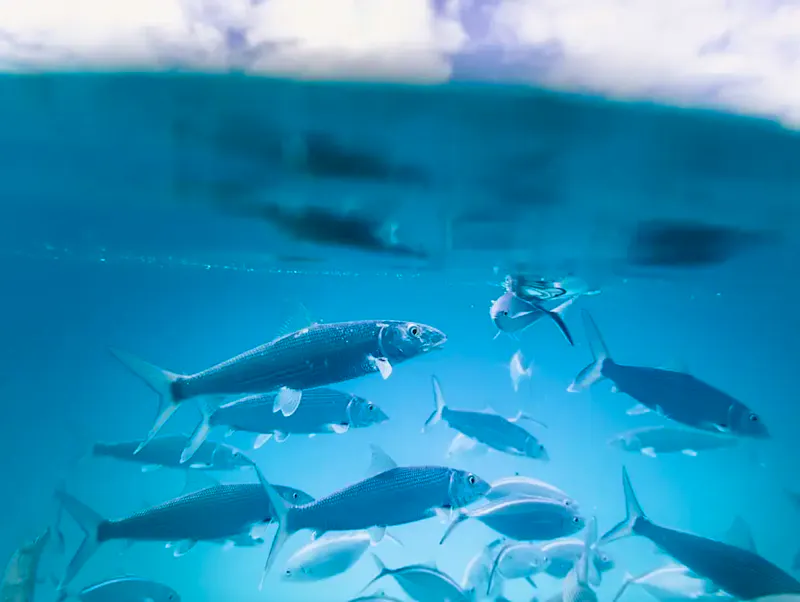
La Table de Colette: Gastronomy Committed to Protecting Our Oceans
Is it possible to offer gourmet cuisine while preserving marine resources? For La Table de Colette, the answer is yes.
Located at 17 Rue Laplace in Paris’s 5th arrondissement, the restaurant—led by Chef Josselin Marie—has been developing a comprehensive approach to environmental responsibility since its opening in 2019. This approach focuses in particular on plant-based ingredients, reducing the carbon footprint, combating food waste, and selecting sustainable seafood.
As part of this initiative, La Table de Colette has chosen to partner with Ethic Ocean, an environmental organization dedicated to the preservation of fishery resources and marine ecosystems.
The goal is simple: to ensure that every choice of fish or seafood aligns with the status of the resource, the product’s origin, and the fishing or aquaculture practices used.
Why does sustainable fishing matter to restaurants as well?
The consumption of seafood has a direct impact on marine resources. Restaurants therefore have an important role to play in shaping sourcing practices.
According to the FAO and its global assessment of marine fish stocks, 35.5% of the stocks assessed worldwide are currently considered overexploited.
For a restaurant, choosing sustainable fish is not simply a matter of selecting a species considered “responsible.” Several criteria must also be taken into account:
- the species and its scientific name;
- the fishing area;
- the status of the stock in question;
- the fishing method;
- the size of the individuals caught;
- the spawning season;
- origin and traceability;
- farming conditions in the case of aquaculture.
This is precisely the approach that Ethic Ocean advocates through its tools designed for industry professionals.
What is Ethic Ocean?
Ethic Ocean is a French environmental organization dedicated to the conservation of fishery resources and marine ecosystems.
Its work is aimed in particular at fishermen, aquaculturists, suppliers, distributors, fishmongers, and restaurant owners. The organization supports professionals in assessing the sustainability of their supply chains and in implementing more responsible practices.
Ethic Ocean also develops educational tools to help professionals and consumers better understand the issues related to seafood.
The Ethic Ocean Species Guide
Among the most useful tools is the Ethic Ocean Species Guide, which analyzes the main species consumed in France, Belgium, and Switzerland from a sustainability perspective.
In particular, the guide provides information on which fishing areas to prioritize or avoid, the status of fish stocks, sexual maturity sizes, and certain recommendations regarding fishing techniques.
For a chef, this type of information makes it possible to adapt a menu based on availability and the state of resources rather than treating fish as interchangeable products.
The Ethic Ocean Charter: Turning Purchases into Concrete Action
The Ethic Ocean Charter allows restaurant owners to formalize their commitment to preserving marine resources.
For La Table de Colette, this initiative is part of a broader philosophy: to advance gastronomy without compromising the enjoyment of food, product quality, or environmental responsibility.
Josselin Marie’s restaurant is also listed by Écotable, an organization specializing in supporting and promoting restaurants committed to environmental initiatives.
1. Adapting the menu to the state of marine resources
Responsible cuisine begins with the choice of species.
The idea is not simply to remove all fish from the menu, but to diversify the species served and avoid those whose stocks are particularly vulnerable.
In this regard, Ethic Ocean’s Species Guide serves as a decision-making tool for professionals.
This approach also encourages chefs to introduce diners to species that are less well-known to the public. This shift helps reduce the pressure on certain species that are in particularly high demand.
2. Prioritize an approach based on origin and stock
The term “sustainable fish” alone is not enough.
The same species can face very different circumstances depending on its stock, geographic area, and method of catch. That is why Ethic Ocean specifically recommends carefully verifying the origin and production conditions of seafood products.
For professionals, this means asking suppliers the right questions:
- What is the exact species?
- Where was it caught?
- What fishing method was used?
- What is the status of the stock?
- What is the size of the fish?
- Was the product caught during a sensitive spawning period?
- How traceable is the product?
This requirement for information makes it possible to shift from a purchasing approach based solely on price or availability to a sustainable procurement policy.
3. Consider fishing methods
Not all fishing methods have the same impact on ecosystems.
Selectivity, bycatch, interactions with the seafloor, and the ability to target mature individuals are all factors to consider.
For a socially responsible restaurant, understanding the fishing method allows you to look beyond the simple name of the fish listed on a bill.
4. Respecting seasonality and spawning periods
The sustainability of a seafood product also depends on when it is caught.
Certain species are particularly vulnerable during their spawning season. Ethic Ocean’s Species Guide provides information on spawning periods and sexual maturity sizes for many species.
This knowledge can lead a chef to temporarily adjust their menu, switch suppliers, or substitute one species for another.
Seasonality thus becomes a powerful tool for preserving marine biodiversity.
5. Informing Staff and Customers
A sustainable fishing approach doesn’t end with choosing a supplier.
It can also serve as a tool for educating staff and customers.
At Ethic Ocean, support for professionals includes awareness-raising and training initiatives designed to foster a better understanding of sustainability criteria for seafood products. Support resources for professionals are available on the Ethic Ocean website.
For fine-dining restaurants, this educational approach is particularly important: a server or sommelier can explain why a certain species is on the menu, why another is no longer available, or why the menu changes based on supply.
The European eel: why Ethic Ocean recommends suspending purchases
The European eel (Anguilla anguilla) has become a symbol of the fragility of aquatic resources.
Classified as “Critically Endangered” by the IUCN, its populations are in sharp decline.
The European eel’s entry on the IUCN Red List provides information on its conservation status and the main threats facing the species.
Ethic Ocean now recommends suspending purchases of European eel, regardless of its origin, in its Species Guide.
The organization has also launched the “Eel, No Thanks!” campaign to raise awareness among industry professionals and the general public about the situation facing this species.
Why is the eel threatened?
The European eel is a migratory species whose life cycle depends on both marine and inland waters.
It faces several threats:
- fishing, particularly during the early stages of its development;
- migration barriers such as dams;
- habitat degradation;
- pollution;
- environmental changes.
According to data compiled by Ethic Ocean based on ICES research, the recruitment index for glass eels was significantly lower than during the historical reference period.
This situation explains why Ethic Ocean is calling on restaurant professionals to stop purchasing eel.
What are the alternatives to eel in a fine-dining restaurant?
Avoiding an endangered species does not mean giving up culinary creativity.
Ethic Ocean notes, for example, that smoked eel can be replaced with products from species or supply chains offering better prospects for sustainability, depending on the region and production methods.
This approach aligns with a major trend in responsible gastronomy: introducing diners to a wider variety of species and building recipes around the actual availability of resources.
Chefs no longer choose their ingredients solely based on a recipe; they also adapt the recipe to what the sea can sustainably provide.
La Table de Colette’s Approach: Responsible Gastronomy in Paris
La Table de Colette’s environmental approach is not limited to seafood.
Since its opening in 2019, Josselin Marie’s restaurant has championed a holistic approach to responsible gastronomy. In particular, the restaurant focuses on the role of plant-based ingredients, reducing its carbon footprint, and minimizing waste.
Learn more about the restaurant’s approach on La Table de Colette’s official website.
This philosophy is also reflected in how the restaurant prepares its seafood.
Sustainable fishing is therefore not just a marketing gimmick added to the menu: it’s part of a broader philosophy on how to cook and consume.
It is this consistency that makes La Table de Colette an interesting example for understanding how a fine-dining restaurant can integrate environmental concerns into its day-to-day operations.
Why do chefs play an important role in sustainable fishing?
A chef doesn’t just choose what to cook.
They also help determine what customers discover, order, and learn to appreciate.
When a restaurant highlights a lesser-known species that is available in good condition, it can help diversify demand.
Conversely, when demand is concentrated on a few very popular species, pressure on certain resources can increase.
Ethic Ocean specifically highlights the role of culinary professionals in this shift in eating habits. Its network brings together chefs and restaurants that aim to balance fine dining with the conservation of marine resources.
Cooking thus becomes a way to raise awareness without sacrificing enjoyment.
How can you choose sustainable fish at a restaurant or from a fishmonger?
For consumers, asking a few simple questions can help you better understand the origin of a seafood product.
The 5 Questions to Ask
1. What is the exact species?
The common name may not be enough. The scientific name allows you to identify the product precisely.
2. Where was the fish caught or farmed?
The status of a fish stock can vary significantly depending on the geographic area.
3. What fishing method was used?
The method of capture is an important factor in assessing environmental impact.
4. What is the size of the fish?
A fish must have had time to reproduce before being caught.
5. What is the season?
The spawning season and the status of the fish population must be taken into account.
For more information, check out the Ethic Ocean Species Guide or the Ethic Ocean app.
Sustainable Fishing According to La Table de Colette and Ethic Ocean: Key Takeaways
La Table de Colette’s approach is based on a key idea: the culinary world can contribute to the preservation of marine resources by changing its sourcing practices.
In practice, responsible seafood cuisine involves, in particular:
- prioritizing species and stocks with the best prospects for sustainability;
- knowing the exact origin of the products;
- taking fishing techniques into account;
- respecting spawning seasons;
- avoiding species whose stocks are particularly vulnerable;
- diversify the species offered to customers;
- train staff;
- explain these choices to consumers;
- rely on scientific data and specialized tools such as those provided by Ethic Ocean.
For Josselin Marie and La Table de Colette, this approach is part of a broader vision: that of a culinary culture capable of preserving the resources on which it depends.
FAQ: Sustainable Fishing, Ethic Ocean, and La Table de Colette
What is Ethic Ocean?
Ethic Ocean is a French environmental organization dedicated to the conservation of fishery resources and marine ecosystems. In particular, it supports professionals in the fishing, aquaculture, retail, and restaurant industries in their efforts toward sustainable sourcing.
What is the Ethic Ocean Charter?
The Ethic Ocean Charter is a commitment framework designed specifically for restaurant professionals and fishmongers who wish to contribute to the preservation of marine resources.
View the Ethic Ocean Charter for chefs and restaurant owners.
Why is European eel not recommended?
The European eel is classified as “Critically Endangered” by the IUCN, and its populations have declined sharply. Ethic Ocean recommends suspending purchases of European eel in its Species Guide.
View the conservation status of the European eel on the IUCN Red List.
How can you tell if a fish is sustainable?
You should check the species, the fishing or farming area, the stock status, the fishing method, the size of the fish, and the season.
The Ethic Ocean Species Guide provides this information for many species.
Why should a fine-dining restaurant care about sustainable fishing?
Because its sourcing choices directly influence the demand for seafood. Chefs and restaurant owners can help drive changes in sourcing practices and consumer habits.
Where is La Table de Colette located?
La Table de Colette is a fine-dining restaurant located at 17 rue Laplace, 75005 Paris, in the Mouffetard neighborhood.
Discover La Table de Colette and its approach.
Learn more
- Ethic Ocean — Preserving marine resources and supporting industry professionals.
- Ethic Ocean Species Guide — Recommendations on seafood species and products.
- Ethic Ocean Charter for Chefs and Restaurant Owners — Overview of the commitment initiative.
- Ethic Ocean App — Practical information on species and their sustainability.
- FAO – Global Assessment of Marine Fish Stocks — International data on the status of fishery resources.
- IUCN – Red List — International reference on the conservation status of species.
- La Table de Colette — Official website of Josselin Marie’s restaurant.
- Écotable – La Table de Colette — Information on the restaurant’s environmental initiatives.
📝 Article written in collaboration with La Table de Colette and Ethic Ocean – August 2026
Our Values
Discover also
La Table de Colette: How We Calculate and Reduce CO₂
With Bon Pour Le Climat and Net Zero Now, La Table de Colette measures its emissions and takes action for the climate.Our Values
La Table de Colette: A Gastronomic Dream in Paris
From Brittany to Parisian stars, discover Josselin Marie’s inspiring journey and La Table de Colette, a sustainable gastronomic restaurant.Our Values
La Table de Colette: Haute Cuisine Meets Plant-Based Boldness
How Josselin Marie is redefining Parisian fine dining with uncompromising cuisine: 100% flavour and zero food waste.Our Values
La Table de Colette: Gastronomy with a Commitment to the Planet
At La Table de Colette, food waste is collected and recycled with Moulinot, turning organic waste into compost or energy as part of a circular economy approach.Our Values
La Table de Colette: A Kitchen Powered by Renewable Energy
At La Table de Colette, chef Josselin Marie is reducing the kitchen’s energy footprint through renewable electricity and biomethane.